

The Hidden Cost of Identity Technical Debt

Table of Contents
- The Hidden Cost of Identity Technical Debt
- What Is Identity Technical Debt?
- Identity Technical Debt vs. Identity Risk, Identity Sprawl, and Identity Hygiene
- How Identity Technical Debt Accumulates
- The Hidden Costs of Identity Technical Debt
- How to Measure Identity Technical Debt
- Identity Technical Debt Maturity Model
- How to Reduce Identity Technical Debt
- Identity Technical Debt vs. Related Identity-Security Problems
- Identity Technical Debt Ownership and Operating Model
- Identity Technical Debt Best Practices
- How Qualys ETM Identity Helps Reduce Identity Technical Debt
- Conclusion: Treat Identity Debt as a Measurable Risk Backlog
- Frequently Asked Questions
Key Takeaways
- Identity technical debt is the accumulated security, governance, and operational burden created by unmanaged identities, excessive permissions, outdated access, and fragmented controls.
- It’s caused by identity sprawl, privilege creep, dormant and orphaned accounts, excessive permissions, unmanaged non-human identities (NHIs), and persistent policy exceptions.
- It increases breach blast radius, Security Operations Center (SOC) investigation time, audit fatigue, operational disruption, delivery friction, and tool complexity.
- It should be measured using a five-part framework that covers inventory and ownership, dormancy, privilege, credentials, and remediation, rather than a single score.
- It can be reduced through four maturity stages and a six-step roadmap: Discover, Classify, Prioritize, Remediate, Prevent, and Measure.
- Qualys ETM Identity correlates identity sprawl, privilege exposure, and NHIs with Enterprise TruRisk™, so this debt can be discovered, prioritized, and reduced through verified, closed-loop remediation.
The Hidden Cost of Identity Technical Debt
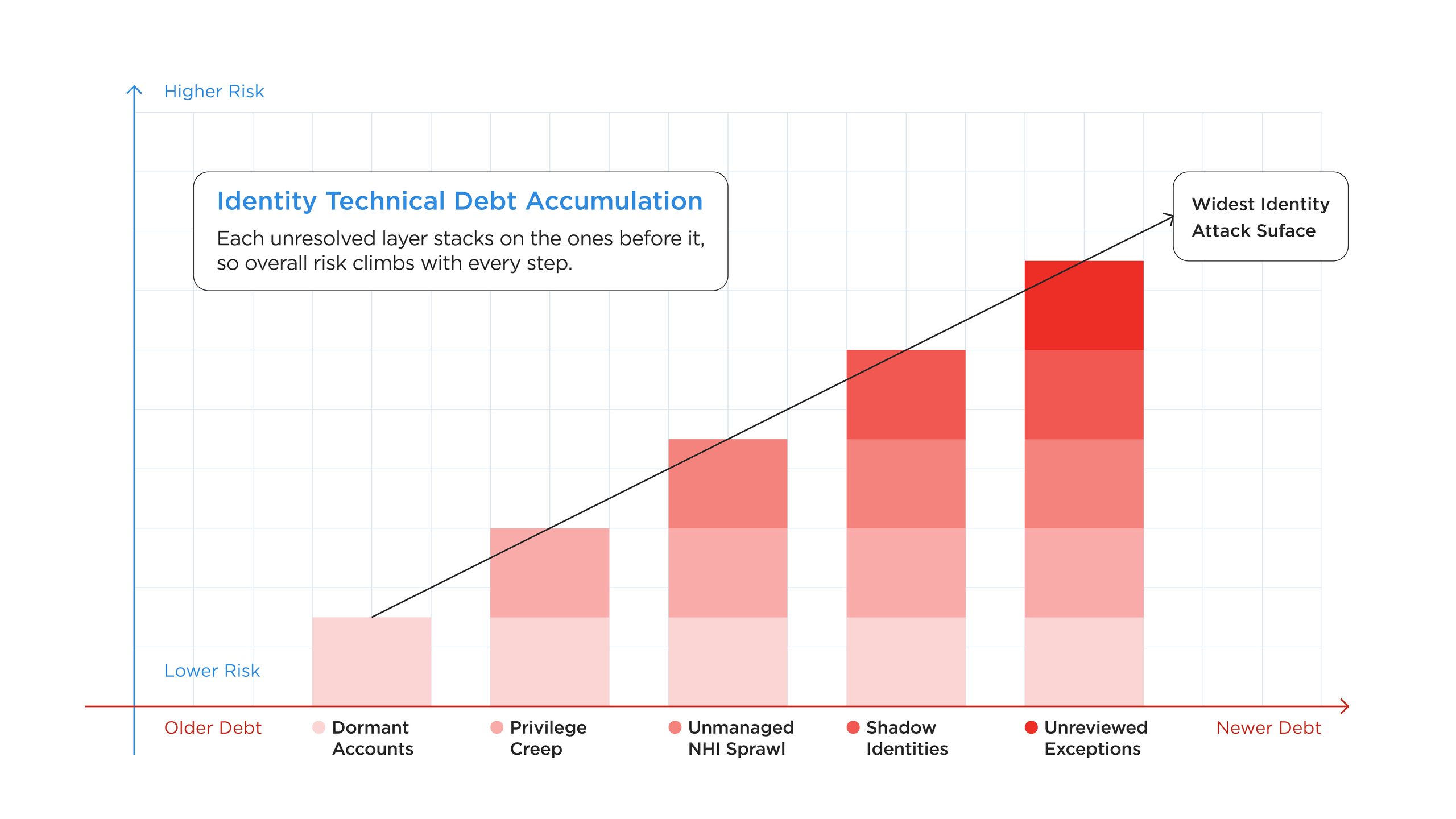
Most identity decisions are made under pressure: a contractor needs access today, a migration needs a service account now, an acquired business needs users provisioned on day one. Each solves an immediate need and quietly leaves risk behind. That’s identity technical debt: the accumulated security, governance, and operational burden created by unmanaged identities, excessive permissions, outdated access, weak authentication, and fragmented identity controls.
What Is Identity Technical Debt?
Identity technical debt is the backlog of unresolved identity risks, control gaps, exceptions, and lifecycle failures. It includes dormant and overprivileged accounts, as well as hidden relationships among users, machines, applications, credentials, and permissions. Most debt comes from thousands of small decisions that were never revisited.
Identity Technical Debt vs. Identity Risk, Identity Sprawl, and Identity Hygiene
These terms are related but distinct:
| Term | What It Describes |
| Identity technical debt | The accumulated backlog and future cost when sprawl and risk go unaddressed |
| Identity risk | The likelihood and impact of an identity being compromised right now |
| Identity sprawl | Uncontrolled growth of identities and identity silos across systems and clouds |
| Identity hygiene | The day-to-day practices that prevent debt from accumulating |
Sprawl drives growth, risk reflects current exposure, hygiene prevents accumulation, and technical debt is the resulting backlog. Left unmanaged, that backlog widens the identity attack surface over time.
How Identity Technical Debt Accumulates
Identity debt grows through thousands of small access and lifecycle decisions.
1. Identity Sprawl Across Hybrid and Multi-Cloud Systems
Users, applications, cloud accounts, service principals, workloads, bots, and AI agents multiply across disconnected systems, making ownership and access visibility difficult to maintain.
2. Privilege Creep from Role Changes and Temporary Access
Role changes, projects, and emergency access often leave old permissions behind, turning temporary access into a persistent identity attack surface.
3. Dormant, Orphaned, and Shadow Accounts
Former employees, unused accounts, disconnected apps, and duplicates often remain active. Dormant accounts are unused, orphaned accounts lack owners, and shadow identities were never sanctioned.
4. Excessive Permissions and Hidden Effective Access
Direct privileges, nested groups, inherited roles, and trust relationships can create toxic combinations, while nominal roles may understate an identity’s effective reach.
5. Non-Human Identity Risk and Unmanaged Credentials
Service accounts, API keys, tokens, secrets, and AI agents often lack clear ownership. Long-lived credentials make cleanup risky. Entro Labs found NHIs grew 44% year-over-year and now outnumber human identities 144 to 1.
6. Weak Identity Policies and Persistent Exceptions
Inconsistent MFA, non-expiring passwords, legacy authentication, and permanent break-glass access create persistent debt when temporary exceptions lack expiry dates.

Learn How Hidden Identity Relationships Increase Risk
Understand how identity data, attack paths, asset exposure, and TruRisk™ context reveal the real impact of accumulated identity debt.
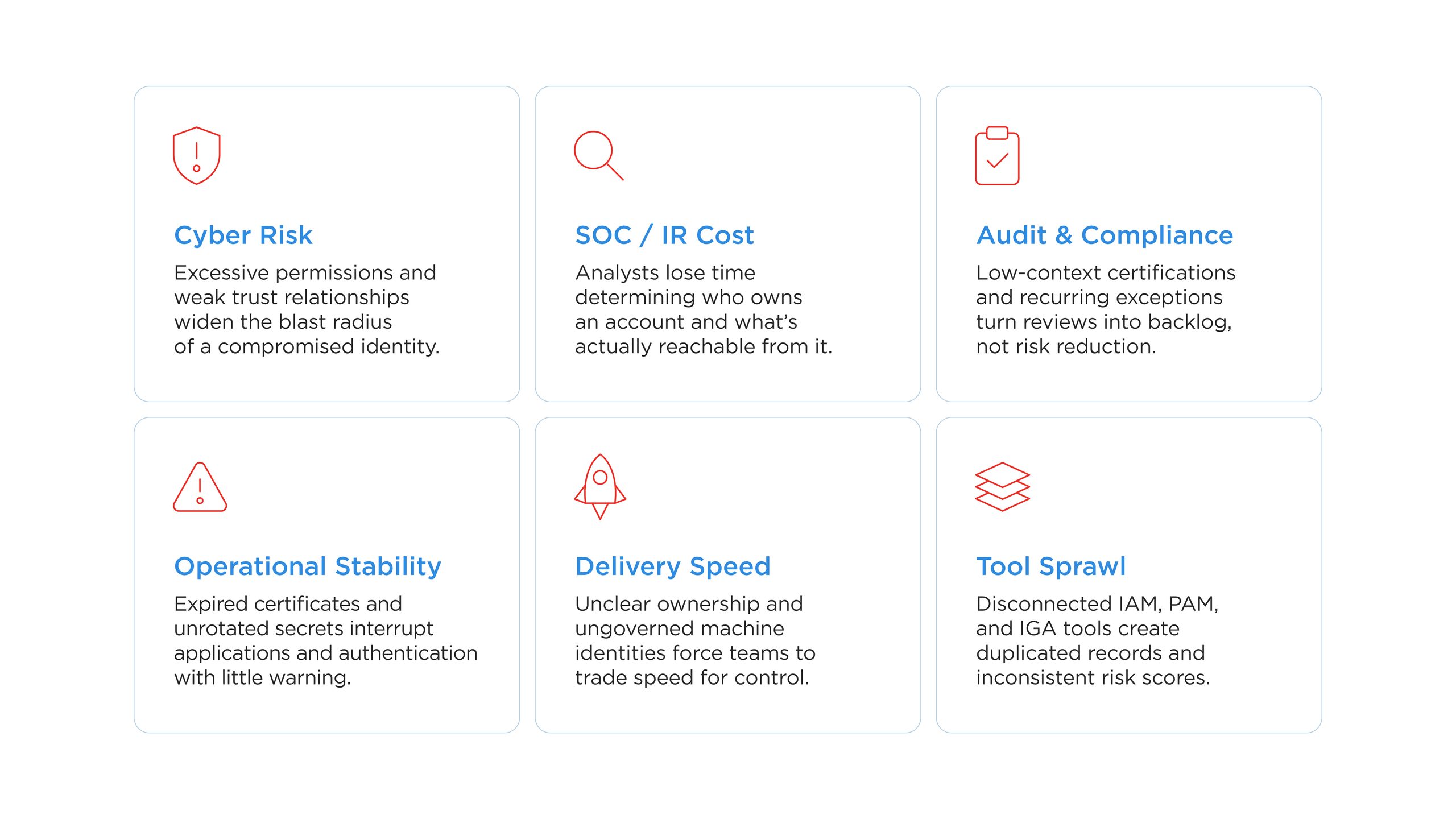
The Hidden Costs of Identity Technical Debt
Identity debt often surfaces later as wider breach impact, slower investigations, and persistent audit backlogs.
1. Larger Blast Radius When an Identity is Compromised
Excessive permissions and weak trust relationships can expand the blast radius of a compromised identity.
2. Higher SOC Investigation and Incident-Response Costs
Analysts spend more time determining who owns an account, what access is legitimate, and what’s reachable from it.
3. Audit Fatigue and Access-Review Backlogs
Low-context certifications and recurring exceptions turn reviews into an administrative backlog instead of risk reduction.
4. Operational Disruption and Service Outages
Expired certificates and unrotated secrets can interrupt applications and authentication with little warning.
5. Slower Cloud, SaaS, DevOps, and AI Delivery
Unclear ownership and ungoverned machine identities force teams to choose between speed and control.
6. Growing Tool and Governance Complexity
Disconnected Identity and Access Management (IAM), Privileged Access Management (PAM), Identity Governance and Administration (IGA), and directory systems create duplicated records and inconsistent risk scores.
How to Measure Identity Technical Debt
Measure identity technical debt across coverage, exposure, ownership, recurrence, and remediation rather than through a single score.
1. Identity Inventory and Ownership Metrics
Track known and unknown identities, human-to-non-human ratios, unowned identities, duplicates, shadow accounts, disconnected applications, and authoritative-source coverage.
2. Dormancy and Lifecycle Metrics
Track inactive identities, terminated users with active access, stale service accounts, and overdue deprovisioning. Apply dormancy thresholds based on identity type and risk.
3. Privilege and Permissions Metrics
Track privileged identities, excessive permissions, standing admin access, toxic combinations, nested groups, and direct or indirect paths to critical assets. Measure effective access, not just assigned roles.
4. Credentials and Authentication Metrics
Track Multi-Factor Authentication (MFA) coverage, legacy authentication, password and secret age, non-expiring credentials, exposed secrets, and certificate or key expiry. Pay particular attention to long-lived credentials used by NHIs. For non-human identity risk, track service-account ownership, token and API-key age, secret rotation, excessive permissions, and credentials that remain active after their associated workload is retired.
5. Remediation and Recurrence Metrics
Track ownership and remediation times, verified versus reopened findings, expired exceptions, attack paths closed, and risk reduction over time. Recurrence tracking shows whether resolved risks return.
Identity Technical Debt Maturity Model
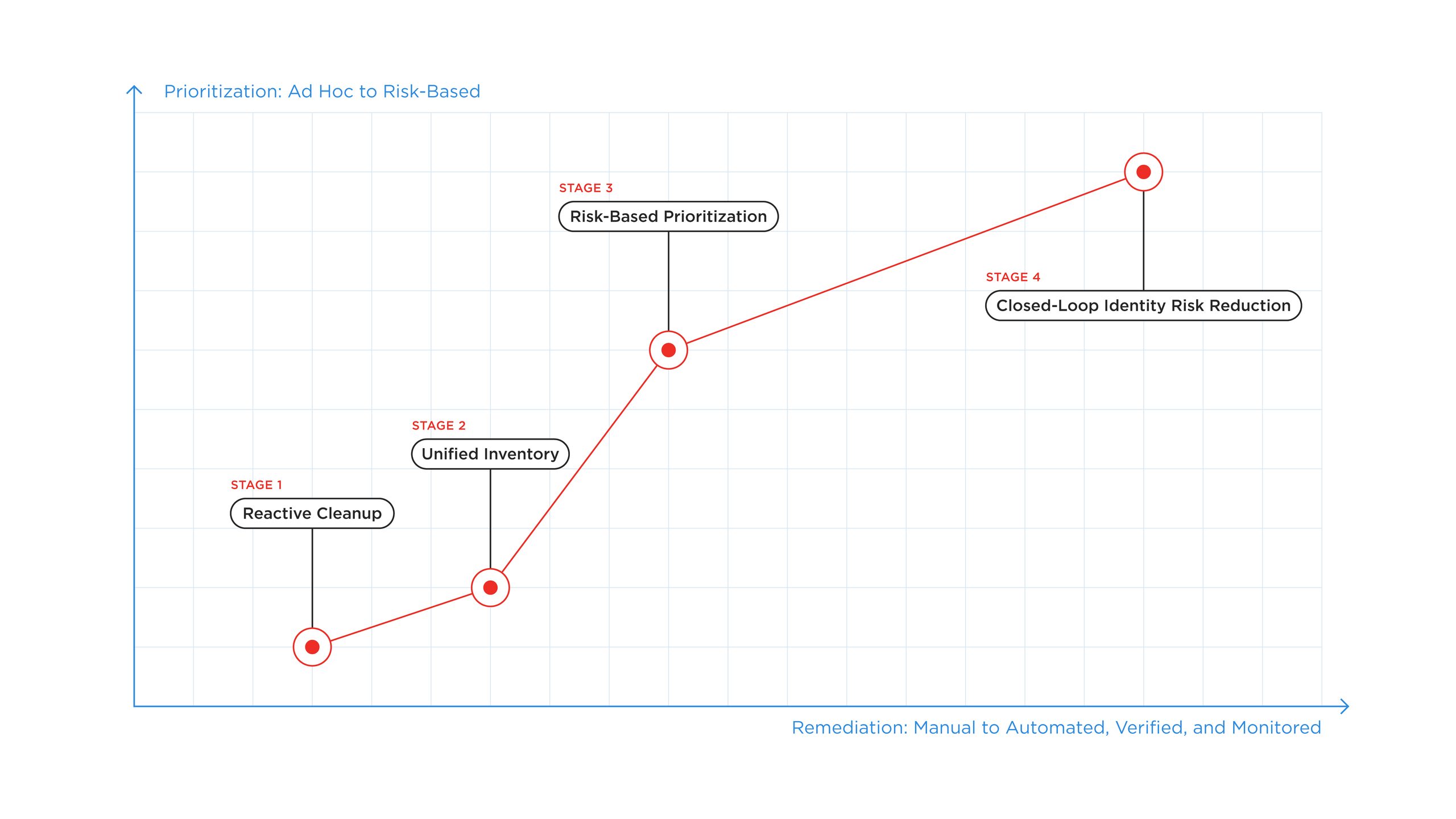
Maturity is measured by fewer recurring exposures and faster, verified remediation across four stages.
1. Reactive Cleanup
Identity work is incident-driven, with spreadsheet-based inventories, one-off cleanup, and inconsistent ownership. Debt is addressed after problems emerge rather than proactively.
2. Unified Inventory
Organizations establish an authoritative identity inventory, assign ownership, implement baseline hygiene policies, and conduct scheduled access reviews. Debt growth slows, but prioritization remains largely rule-based.
3. Risk-Based Prioritization
Organizations continuously assess identity posture, use attack-path context, and apply explainable risk scoring. Teams prioritize exploitable identity risks based on exposure rather than treating all findings equally.
4. Closed-Loop Identity Risk Reduction
Remediation is automated where appropriate, technically verified, and monitored for recurrence. Organizations track risk reduction over time to ensure resolved debt does not return.
How to Reduce Identity Technical Debt
The roadmap follows six stages: Discover, Classify, Prioritize, Remediate, Prevent, and Measure.
- Build an authoritative identity inventory across human, machine, service, and shadow identities, with assigned owners.
- Segment debt by identity type and business impact, since dormancy and remediation rules differ by identity type.
- Remove dormant, orphaned, and unnecessary access after validating dependencies.
- Secure privileged and non-human identities by rotating secrets, reducing standing privilege, and defining ownership.
- Close high-risk attack paths and trust gaps that reach high-value assets.
- Automate safe lifecycle and remediation workflows, verify closure, monitor recurrence, and report risk reduction.
See Identity Risk in One Prioritized View
See how identity discovery and attack-path context help teams prioritize which accumulated identity risks to eliminate first.
Identity Technical Debt vs. Related Identity-Security Problems
| Concept | What It Describes | Typical Indicators | Primary Owner | Relationship to Identity Debt |
| Identity sprawl | Uncontrolled growth of identities and silos | Multiple disconnected directories, duplicate accounts | IAM / IT Ops | A primary driver of identity debt |
| Privilege creep | Gradual, unremoved accumulation of access | Access unrelated to current role | App/resource owners | A specific form of identity debt |
| Dormant accounts | Valid but unused identities | No login activity for extended periods | HR / IAM | A visible, easily-measured form of debt |
| Orphaned accounts | Accounts with no active owner | No authoritative lifecycle source | IT Ops / IAM | Debt that compounds ownership gaps |
| Excessive permissions | Access beyond documented business need | High entitlement count vs. role baseline | App owners / IGA | Debt that widens blast radius |
| NHI identity sprawl | Uncontrolled growth of service accounts, keys, tokens | NHI-to-human ratio far above baseline | DevOps / Platform / Security | The fastest-growing category of identity debt |
| Identity misconfiguration | Incorrect or insecure identity system settings | Weak trust relationships, disabled protections | IAM / Security Engineering | Structural debt at the system level |
| Identity governance challenges | Organizational difficulty enforcing consistent policy | Fragmented ownership, inconsistent review cadence | CISO / IAM leadership | The governance failure that lets debt accumulate |
Each of these contributes to identity technical debt, not a synonym for it: debt is the cumulative backlog that results when none of them are consistently addressed.
Identity Technical Debt Ownership and Operating Model
No single team owns identity technical debt end-to-end. IAM, IGA, PAM, application, SOC, compliance, HR, and business owners each control part of the lifecycle. Identity Security Posture Management (ISPM) provides the continuous risk-management layer that connects these teams, brings identity exposure into a unified view, prioritizes debt by risk, and tracks whether remediation actually reduces exposure. A shared Responsible, Accountable, Consulted, Informed (RACI) matrix defines who discovers debt, validates access, approves exceptions, remediates exposure, and verifies risk reduction.
Identity Technical Debt RACI Matrix
| Activity | ISPM | IAM/IGA | App/Service Owner | SOC/Security | Compliance | HR |
| Discover identity debt | Responsible | Responsible | Consulted | Accountable | Consulted | Informed |
| Assess and prioritize identity risk | Responsible / Accountable | Consulted | Consulted | Consulted | Informed | Informed |
| Validate business need for access | Consulted | Consulted | Responsible | Informed | Consulted | Informed |
| Remove or rightsize access | Accountable | Responsible | Responsible | Consulted | Informed | Informed |
| Approve exceptions | Consulted | Responsible | Consulted | Consulted | Accountable | Informed |
| Verify remediation closure | Responsible | Responsible | Informed | Accountable | Informed | Informed |
| Report residual risk | Accountable | Consulted | Informed | Responsible | Consulted | Informed |
| Trigger lifecycle events (joiner/mover/leaver) | Consulted | Consulted | Informed | Informed | Informed | Responsible |
Identity Technical Debt Best Practices
- Maintain an authoritative inventory and assign owners to every identity.
- Enforce least privilege and temporary-access expiry.
- Monitor dormancy and eliminate unmanaged credentials.
- Map effective access and prioritize by business impact.
- Document exceptions with owners and expiry dates.
- Automate remediation, verify closure, and report debt trends.
How Qualys ETM Identity Helps Reduce Identity Technical Debt
Sprawl, dormant accounts, privilege creep, and unmanaged NHIs aren’t new challenges to security teams. The challenge is continuously turning this fragmented identity data into a prioritized risk view, driving remediation, and proving that exposure is actually decreasing. This is where ISPM becomes central to reducing identity technical debt.
Qualys ETM Identity provides this ISPM layer by correlating identity exposure with Enterprise TruRisk™, connecting identity risk to the broader attack-surface risk framework.
With Qualys ETM Identity, teams can:
- Build a unified identity inventory across Active Directory (AD), Entra ID, and Okta, covering human, machine, service, and shadow identities and their relationships.
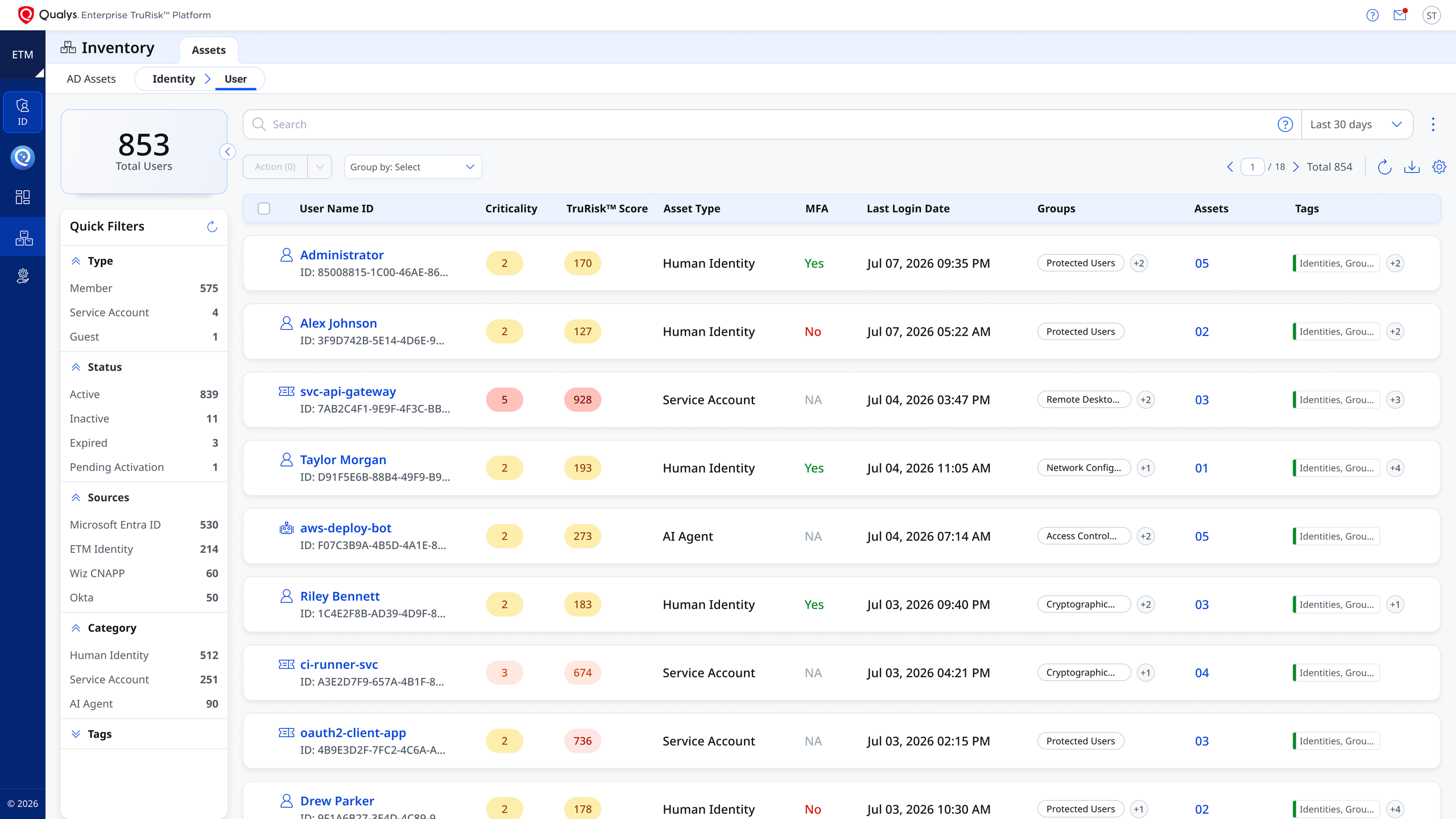
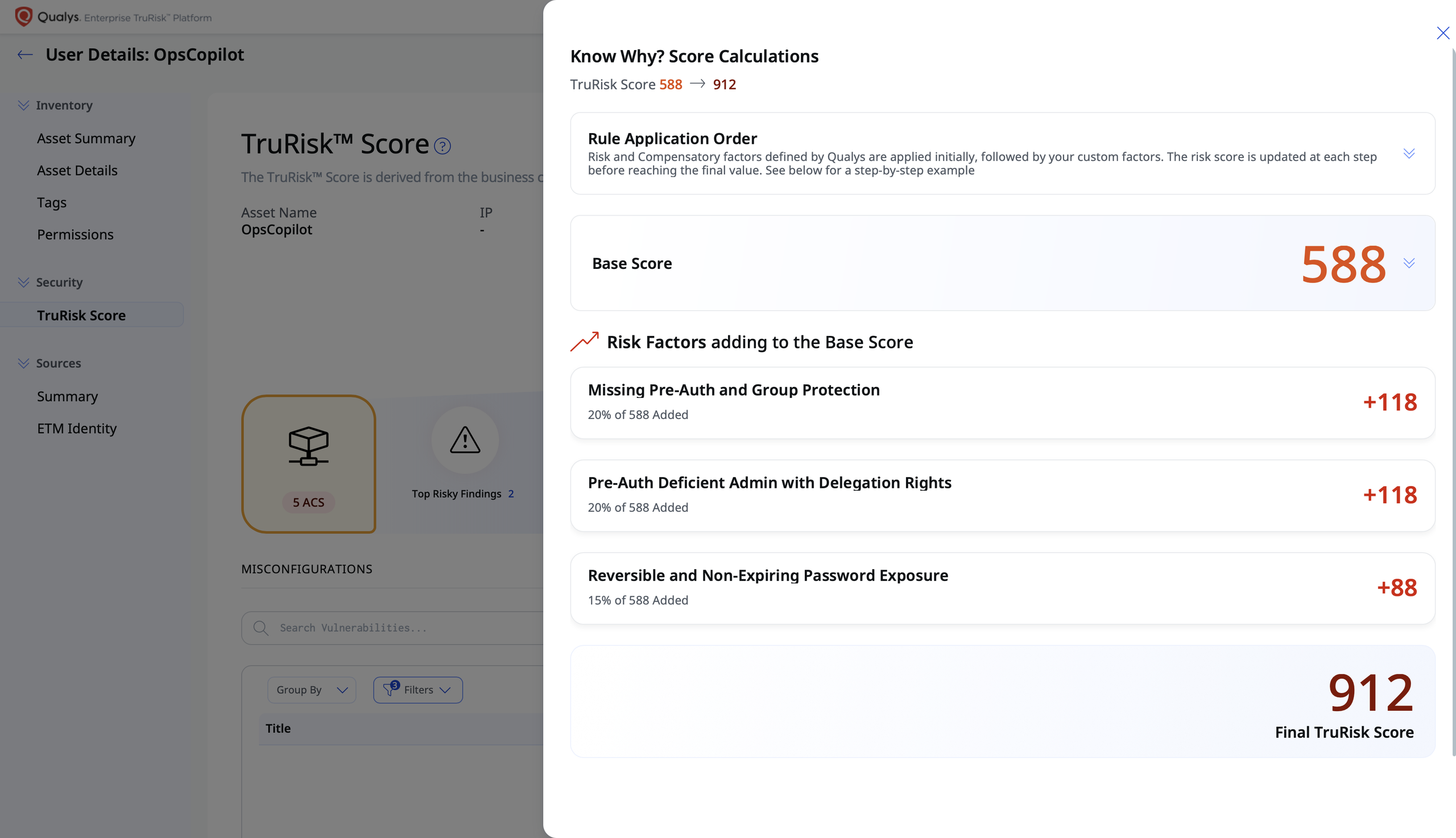
- Correlate identity risk with Enterprise TruRisk™ by combining Qualys Cloud Agent and native connector data and applying Identity TruRisk™ scoring based on risk factors.
- Surface high-risk identity exposure, including stale accounts, privileged identities, excessive access, and toxic combinations.
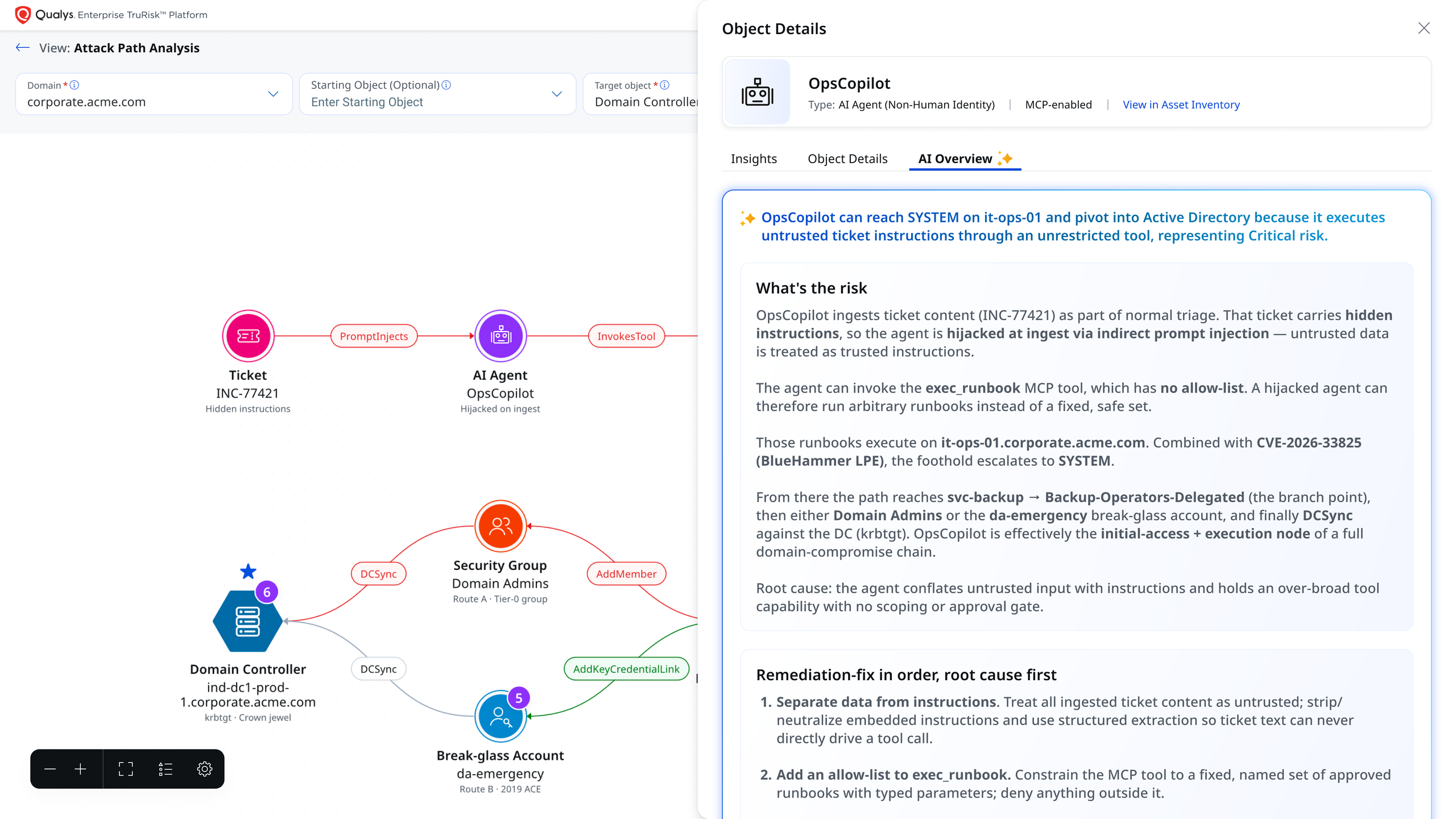
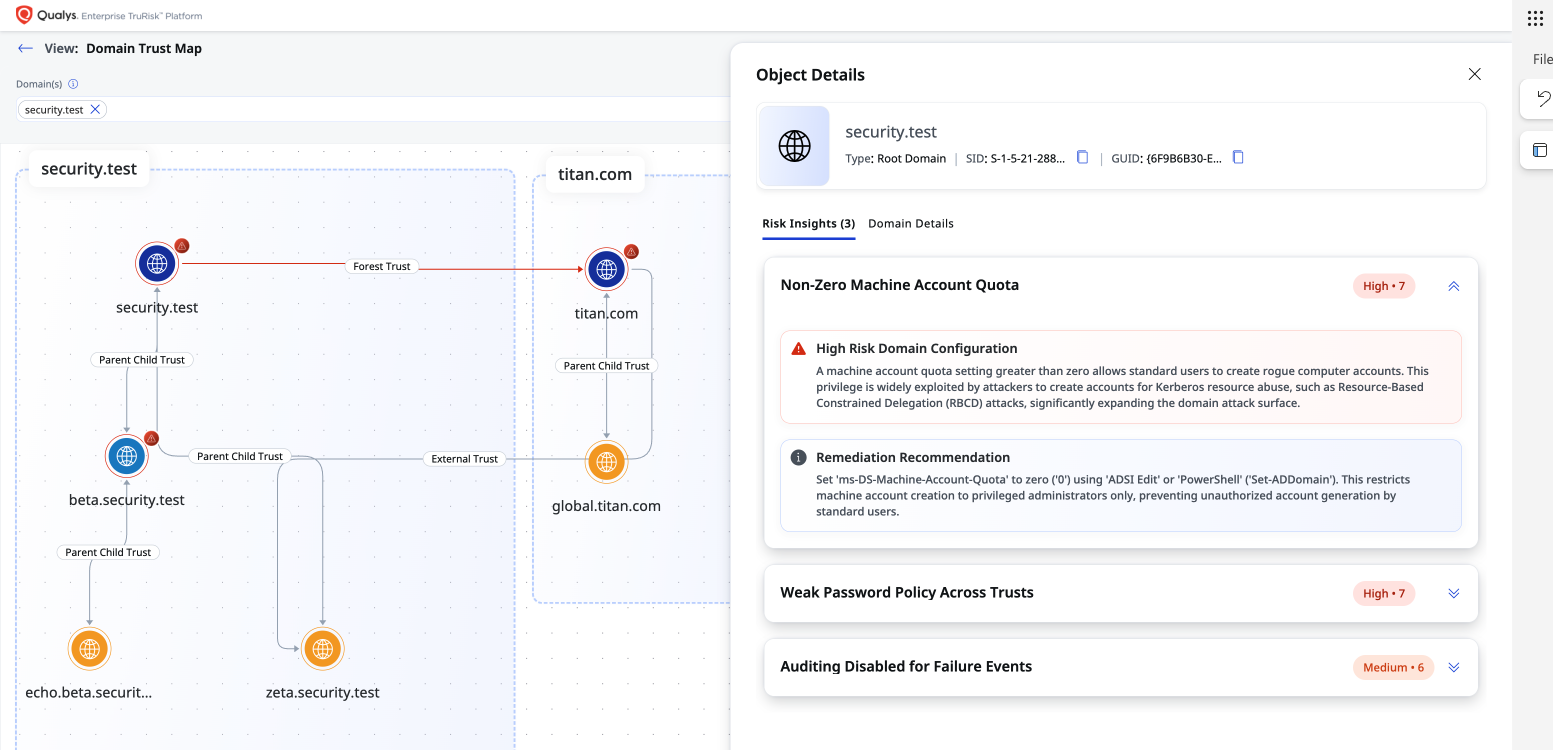
- Understand attack paths and trust relationships through AI-summarized attack-path analysis and Domain Trust Map, revealing how identity exposure can reach critical assets.
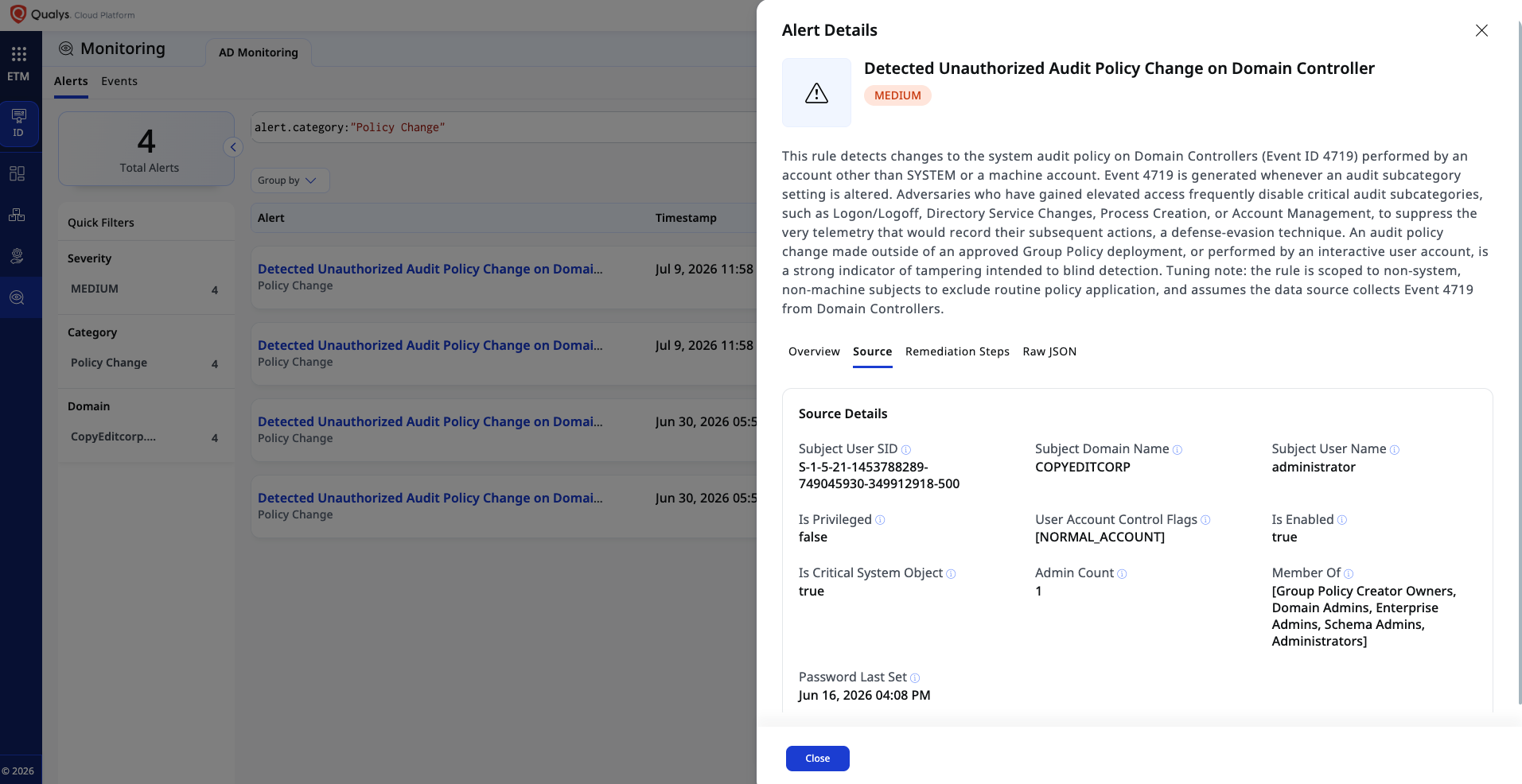
- Monitor changes in real time with AD Real-Time Monitoring to identify identity changes that can introduce new exposure.
- Remediate identity risk using 200+ AD policy controls, one-click actions, patching, mitigation, isolation, and Jira or ServiceNow workflows.
- Verify risk reduction by re-scoring with Identity TruRisk™ and rolling results into organizational TruRisk™, helping confirm that remediation actually reduces exposure.
Together, these capabilities support a broader identity risk management program, without requiring organizations to rip out existing IAM, IGA, or PAM investments.
Conclusion: Treat Identity Debt as a Measurable Risk Backlog
Identity technical debt isn’t solved by one cleanup campaign. It requires an ongoing ISPM approach that continuously discovers identity exposure, prioritizes risk, coordinates remediation across owners, verifies closure, and monitors for recurrence. Clear ownership and safe remediation remain essential, but without continuous visibility and measurement of risk, organizations cannot know whether identity technical debt is actually decreasing.
Reduce Identity Technical Debt Across Hybrid Environments
Find stale identities, excessive privilege, machine-account risk, and attack paths, then verify that remediation reduces business exposure.
Frequently Asked Questions
What is Identity Technical Debt?
The accumulated security, governance, and operational burden created by unmanaged identities, excessive permissions, and fragmented identity controls that build up rather than being resolved as they arise.
How is it different from identity risk?
Identity risk is the exposure of a specific identity right now. Identity technical debt is the cumulative backlog of unresolved risks and governance gaps that build over time.
Why are NHIs a growing driver of identity debt?
They now outnumber human identities by roughly 144 to 1 and grew 44% in a single year, yet rarely have a clear human owner reviewing them, so debt accumulates faster than with human accounts.
How does Qualys ETM Identity help?
It discovers human and machine identities, correlates identity risk with org TruRisk™, maps attack paths and trust relationships, and routes prioritized findings for verified remediation.